


From the end of the last century up to the present day, technological advancement of road bikes has accelerated as fast as the new machines themselves, enabling riders to experience higher levels of stiffness, comfort, aerodynamics, and safety.
One of the bikes that has spearheaded the road bike revolution is the Giant TCR, whose 10th generation was unveiled today at the Italian headquarters of the Taiwanese giant in Nerviano. The outcome of collaborative engineering and extensive testing by pro teams, the 10th generation Giant TCR models are designed to blend tradition and innovation, all with the enduring aim of providing cyclists a competitive advantage in every riding scenario.
Revolutionary geometry
TCR, which stands for Total Compact Road, embodies a concept pioneered by British inventor Mike Burrows, forever altering road bike frame design. In 1997, as the initial images of the TCR surfaced, industry insiders were immediately captivated – or appalled – by its radical shape with its downward-sloping top tube and long seatpost. Giant's innovation marked a wholesale departure from the dominant design of preceding decades, where the top tube was parallel and the seatpost short.
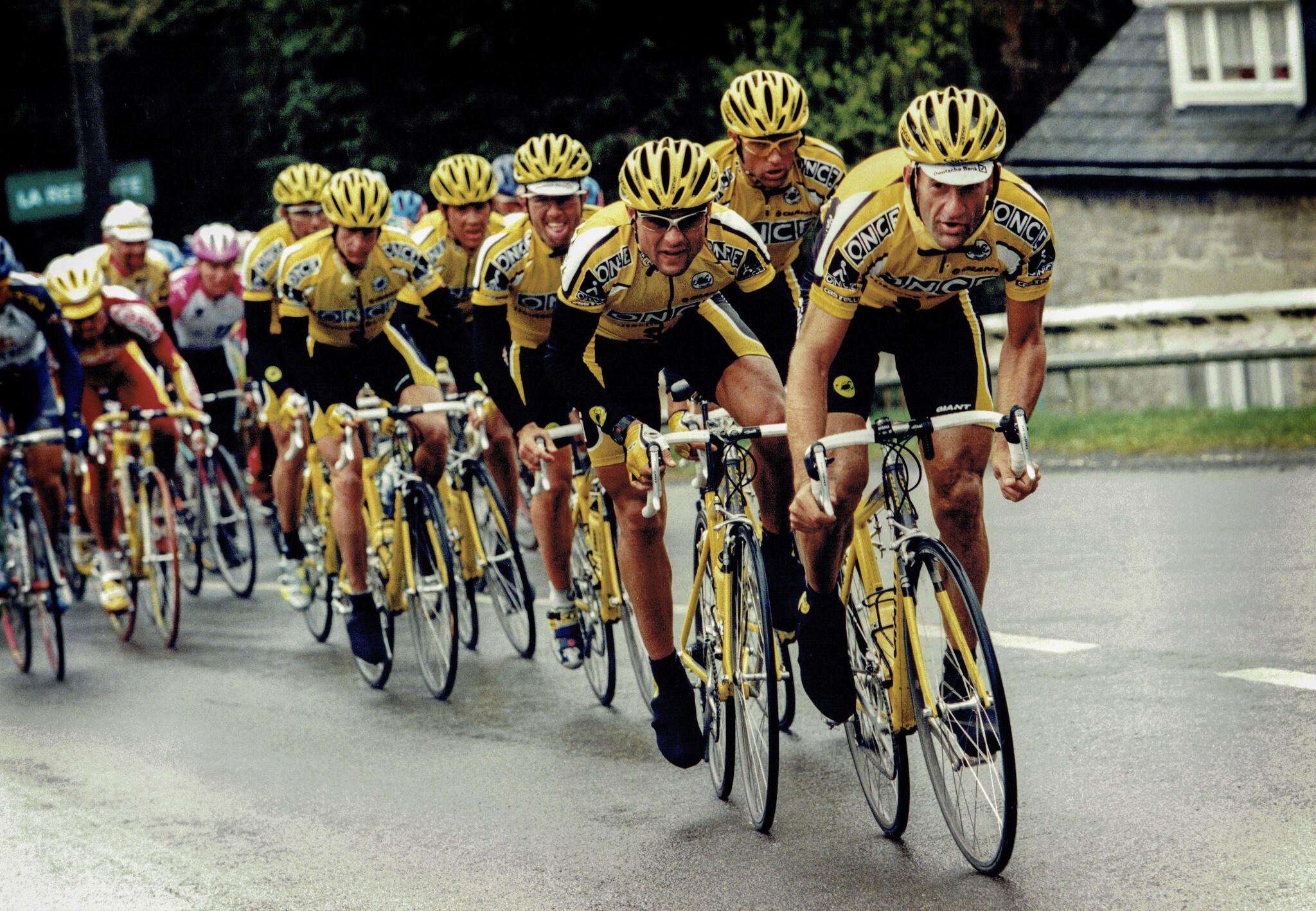
Although its aesthetics might have upset the traditionalists, in 1998 the UCI deemed the Giant TCR to be compliant and its successes piled up thanks to the Spanish ONCE team under the leadership of Laurent Jalabert.
The advantages of the sloping top tube were numerous: it not only contributed to enhanced lightness and rigidity by reducing the size of the front triangle but also improved weight and power transfer by shrinking the rear triangle. Moreover, Compact Road geometry simplified rider position adjustments through the dual modification of seatpost length and stem with only three sizes originally produced – small, medium and large.
In the subsequent years, nearly all bicycle brands sought to emulate Giant's groundbreaking design. From the early 2000s to the present, the iconic bike has undergone periodic updates: the fourth generation in 2005 introduced an integrated seatpost and the eighth in 2016 embraced disc brakes. Now, with the 10th generation, the culmination of a collaborative effort involving Giant’s own designers, engineers, aerodynamicists plus the Jayco AlUla pro team is unveiled.
What's new in the new TCR range?
In the development of the 10th generation of the TCR, Giant’s engineers devised solutions focused on saving watts and weight reduction, with the TCR Advanced SL weighing a claimed 690g – 75g less than the outgoing 2021 version – making it the lightest model to date without compromising stiffness.

The 10th generation also introduces a cleaner handlebar and stem configuration, featuring internal cable routing and a slimmer-shaped head tube. According to Giant’s tests on the new TCR Advanced SL frame, these modifications save 2.28 watts compared to the previous series. The fork design incorporates tube shapes that enhance airflow.
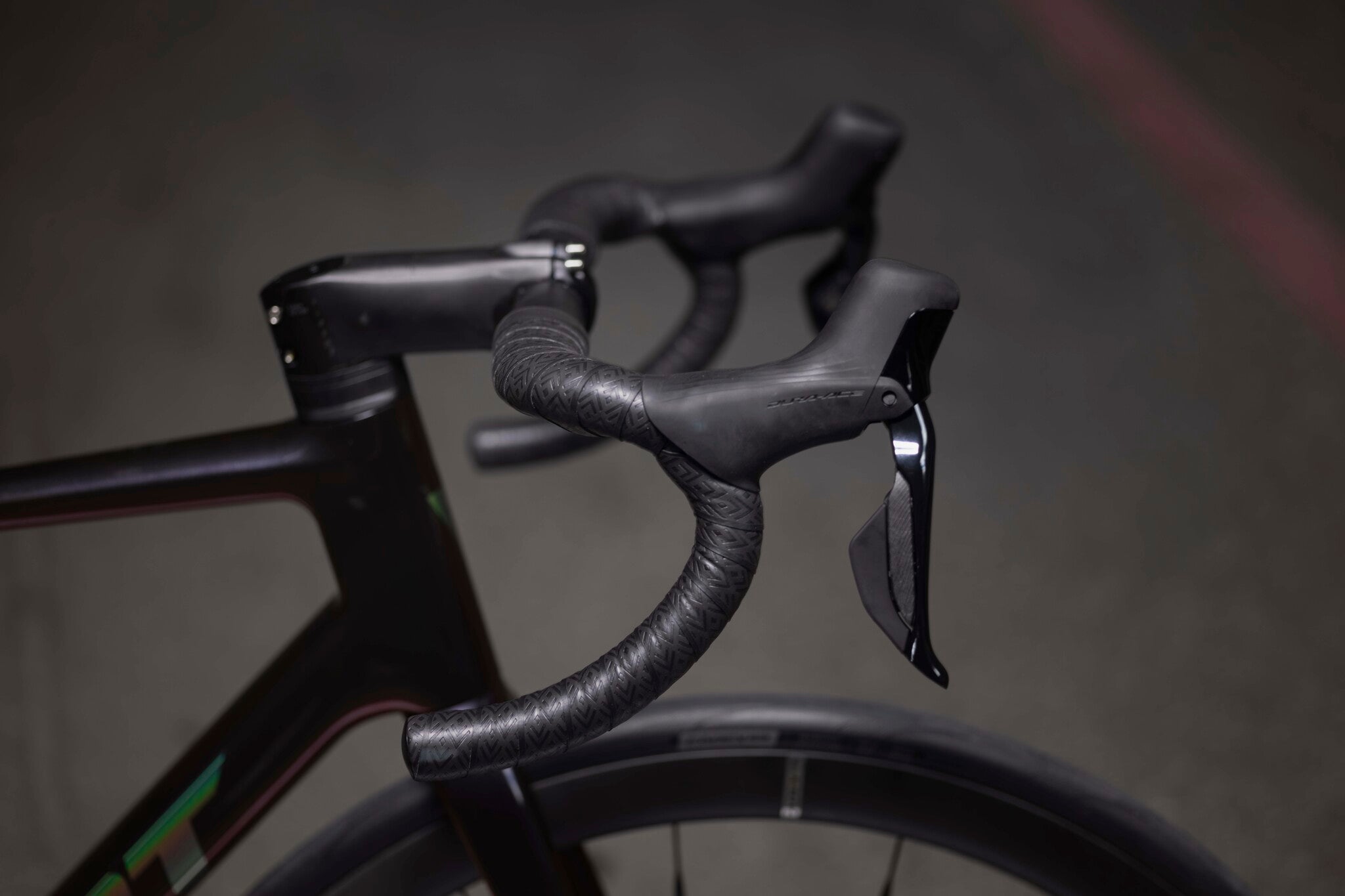
Several adjustments were made to enhance the riding experience. The flattened horizontal section of the handlebar promotes a more relaxed grip on the tops; the raised hood bend aids aerodynamics in a middle position, and slightly flared drops allow quicker transitions between hand positions, providing more precise control during descents and cornering.
The new range introduces two seatpost systems: the TCR Advanced SL features the Integrated Seatpost (ISP), offering a 40g weight saving and improved aerodynamics. The TCR Advanced Pro and Advanced series use the Variant composite seatpost, providing greater ease of adjustment and adaptation.
For the new TCR range, wheels from either CADEX or Giant WheelSystems are chosen, having undergone development to achieve an optimal balance between efficiency, control, and overall aerodynamic improvement.
Rigidity and aerodynamics
The enduring racing focus of the TCR demanded, according to Giant, meticulous engineering efforts to enhance performance in rigidity and aerodynamics. Torsional stiffness tests on the TCR Advanced SL's chassis yielded highly positive feedback, indicating 0.53% greater rigidity compared to the previous generation, despite a lower weight. This increased frame stiffness translates into more efficient power transmission, enabling riders to sustain higher speeds with less effort.
Significant aerodynamic improvements were achieved in the down tube, seatpost, and fork, surpassing the previous TCR generation. The advancements resulted from a combination of computational fluid dynamics and tests conducted in the GST wind tunnel in Immenstaad, Germany. Using a dynamic dummy and a 650cl water bottle for more realistic data, the new TCR Advanced SL chassis kit gained 2.28 watts in wind conditions at 40kph and a yaw angle between -20 and +20 degrees. Additionally, the full TCR Advanced SL 0 exhibited a 4.19 watt improvement compared to the 2021 model.
Alongside its enhanced stiffness, the TCR Advanced SL frame weighs a claimed 690g – 75g less than its predecessor.
Giant's new TCR range is set to launch globally, offering models that cater for diverse needs and budgets starting with the TCR Advanced 2 up to the TCR Advanced SL 0. All the details on models and prices are available on Giant's website.


