


There's something magnetic about the geometry of a 3D printed object. The combination of shapes, lines and forms always captures my attention; I can stare at these objects for hours, and the same goes for the new Fizik Vento Argo R1 Adaptive saddle.
Its name may be a mouthful, like much of the sports gear these days, but in actuality, it is a triumph of simplicity and elegance. At first glance, this 3D printed saddle looks beautiful and performance-driven. While opinions on the aesthetic may be subjective, it's simply a fact that the new Argo is the result of Fizik's most advanced R&D. And it's conceived for any rider, no matter the riding style and shape.
Related: Fizik's saddle of the future
The iconic brand has put a lot of effort into its new saddle, and it's the combination of the Argo line (the most versatile one, designed for comfort and stability) and the 3D-printed technology used on other models' like the Antares. This technique allows Fizik to overcome the limitations of the traditional product line and enables the use of different mesh patterns on different zones of the saddle.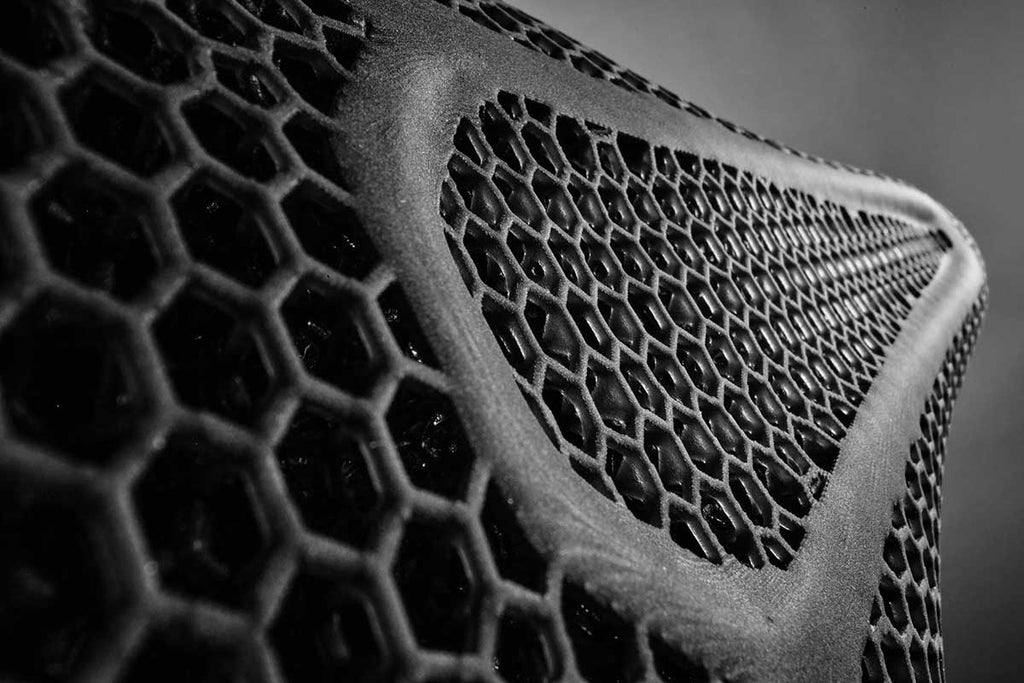 Through the 3D printing and the use of liquid resins, Fizik has developed a standard structure that provides for more stabilisation in the back of the saddle, support in the middle and relieves pressure on soft tissues in the front. From thousands of data points collected from professionals (including Ineos-Grenadiers, Movistar, Ag2r-Citroen and Jumbo-Visma) and amateurs alike, and studies conducted on the different positions used, Fizik understands how bike geometries, riding positions and styles affect pressure patterns.
Its short nose is designed to relieve pressure on soft tissues. Indeed, a saddle's fit and comfort are highly individual, but working towards reducing the forces at play on the delicate parts is one of the first steps of a good bike fit. And the first step to a happy ride, of course. The short and dropped nose, for example, is a characteristic that supports the pubic ramus when the pelvis rotates forward (in an aero position or when we try to generate more power, for example). If on normal saddles more movements were noted to adapt to different situations, the Argo aims to put riders in a position that provides better stability and weight distribution.
Related: The best cycling shoes – The Desire Selection
The result is a product that's best suited for most road riders, but that comes from the brand's Concepts program, a cross-disciplinary collaboration of industry experts that work to improve cycling performance. And Argo is not only a theoretical experiment; it's been designed in collaboration with professional cyclists and tested hard on the road too.
Finally, the 3-D printed design makes it easier to clean, as a hose and water can easily remove the worst of the road muck.
Rouleur's guide to the best products in cycling
The Vento Argo R1 Adaptive comes in two sizes (150 and 140 mm in width). The other measurements remain standard: 265 mm in length, 114 mm in length from the nose to the 75mm width, 45.5 mm in height at the 75mm width, and a 10x7 mm carbon rail mounted on the bottom carbon-reinforced nylon shell. The weight difference between the two sizes is just 6 grams favouring the 140mm one.


